Why Am I Always Thinking About Food?
Do you feel like food is constantly on your mind?
Maybe you're thinking about what you'll eat next while you're still eating your current meal. Perhaps you're planning tomorrow's food before you've finished today. You might find yourself scrolling food content, watching cooking videos, or promising yourself you'll stop thinking about food so much.
If this sounds familiar, you're not alone.
Many people come to me asking the same question:
Why can't I stop thinking about food?
Many assume that constantly thinking about food means they're lacking willpower or have poor self-control. In reality, food obsession and constant food thoughts are often signs that your body or brain is trying to tell you something.
What Is Food Noise?
Food noise is a term used to describe frequent thoughts about food, eating, cravings, or planning your next meal.
Some people describe it as:
Thinking about food all day
Replaying what they've eaten
Counting down until their next meal
Feeling distracted by thoughts about food
Wondering what they should or shouldn't eat
Feeling guilty about food choices
Mentally negotiating around food
For many people, food noise isn't just hunger. It's the constant chatter and questioning around food:
"Should I eat that?"
"I've been good today."
"I shouldn’t eat dessert."
"I'll start again tomorrow."
Food noise can be linked to dieting, restriction, binge eating, ADHD, stress, and physical hunger.
Understanding where those thoughts are coming from is often the first step towards turning the volume down.
1. You're Not Eating Enough
One of the biggest reasons food takes up so much mental space is that you're simply not eating enough.
This doesn't always mean you're intentionally dieting.
You may be:
Skipping breakfast
Eating small portions
Being too busy to eat
Delaying meals
Trying to "be good"
When your body isn't getting enough energy, it naturally becomes more focused on food.
This isn't a flaw.
It's a survival response.
Your brain is designed to help you find food when you need it.
2. You're Restricting Certain Foods
Sometimes it's not about how much you're eating but what you're allowing yourself to eat.
Have you ever noticed that the foods you're trying hardest not to eat are often the foods you think about most?
When foods feel forbidden, they become more appealing.
You might spend all day telling yourself not to eat chocolate, only to find that chocolate is all you can think about.
The more rules we create around food, the more attention those foods tend to receive.
3. You're Stuck In The Binge-Restrict Cycle
Many people who binge eat spend a lot of time thinking about food.
This makes sense.
When you're swinging between restriction and overeating, food can begin to feel emotionally charged.
You may find yourself constantly planning, analysing, negotiating, or worrying about food.
It's exhausting.
The goal isn't to think less about food through more control. Often it's about creating more consistency and flexibility around eating.
4. You're Physically Hungry
It sounds obvious, but many people have become disconnected from their hunger signals after years of dieting.
If you're hungry, your brain is supposed to think about food.
That's how hunger works.
Sometimes what feels like a lack of control is simply your body asking for nourishment.
5. Stress And Emotional Overwhelm
Food can provide comfort, distraction, pleasure, and predictability.
When life feels stressful, overwhelming, lonely, or uncertain, thoughts about food often become louder.
Food may become something you look forward to or something that offers a temporary break from difficult emotions.
This doesn't mean you're doing anything wrong.
It's a normal human response.
6. ADHD And Food Noise
If you have ADHD, food thoughts may feel particularly intense.
Many people with ADHD experience food noise, meaning persistent thoughts about food, eating, cravings, or what to eat next.
This can be influenced by:
Dopamine seeking
Impulsivity
Forgetting to eat regularly
Difficulty with meal planning
Hyperfocus on food
Many adults with ADHD report feeling distracted by food thoughts throughout the day or constantly seeking stimulation through eating.
If you have ADHD, constantly thinking about food isn't necessarily a sign that you're obsessed with food. It may be related to how your brain processes reward, stimulation, and routine.
7. Food Has Become More Than Food
For many people, food becomes tied to self-worth.
A "good" day depends on eating perfectly.
A "bad" day means starting over tomorrow.
When food becomes linked to success, failure, guilt, or morality, it's no surprise that it takes up a lot of mental space.
Food was never meant to carry that much responsibility.
What Can Help Reduce Food Noise?
If you're always thinking about food, the answer usually isn't more discipline.
For many people, food thoughts begin to settle when they:
Eat regular meals
Stop skipping meals
Let go of rigid food rules
Include satisfying foods
Reduce all-or-nothing thinking
Address binge eating patterns
Find other ways to cope with stress
The goal isn't to eliminate food thoughts completely. Food is an important part of life.
The goal is for food to take up an appropriate amount of space rather than feeling like it's running the show.
You Don't Need To Fight Your Food Thoughts
If food feels like it's taking over your life, it doesn't mean you're broken or lacking willpower.
Often, those thoughts are a clue.
A clue that your body needs more nourishment.
A clue that restriction is keeping food on a pedestal.
A clue that stress, overwhelm, ADHD, or binge eating may need attention.
The goal isn't to force yourself to stop thinking about food.
It's to understand why food has become so loud in the first place.
Ready To Break Free From Binge Eating?
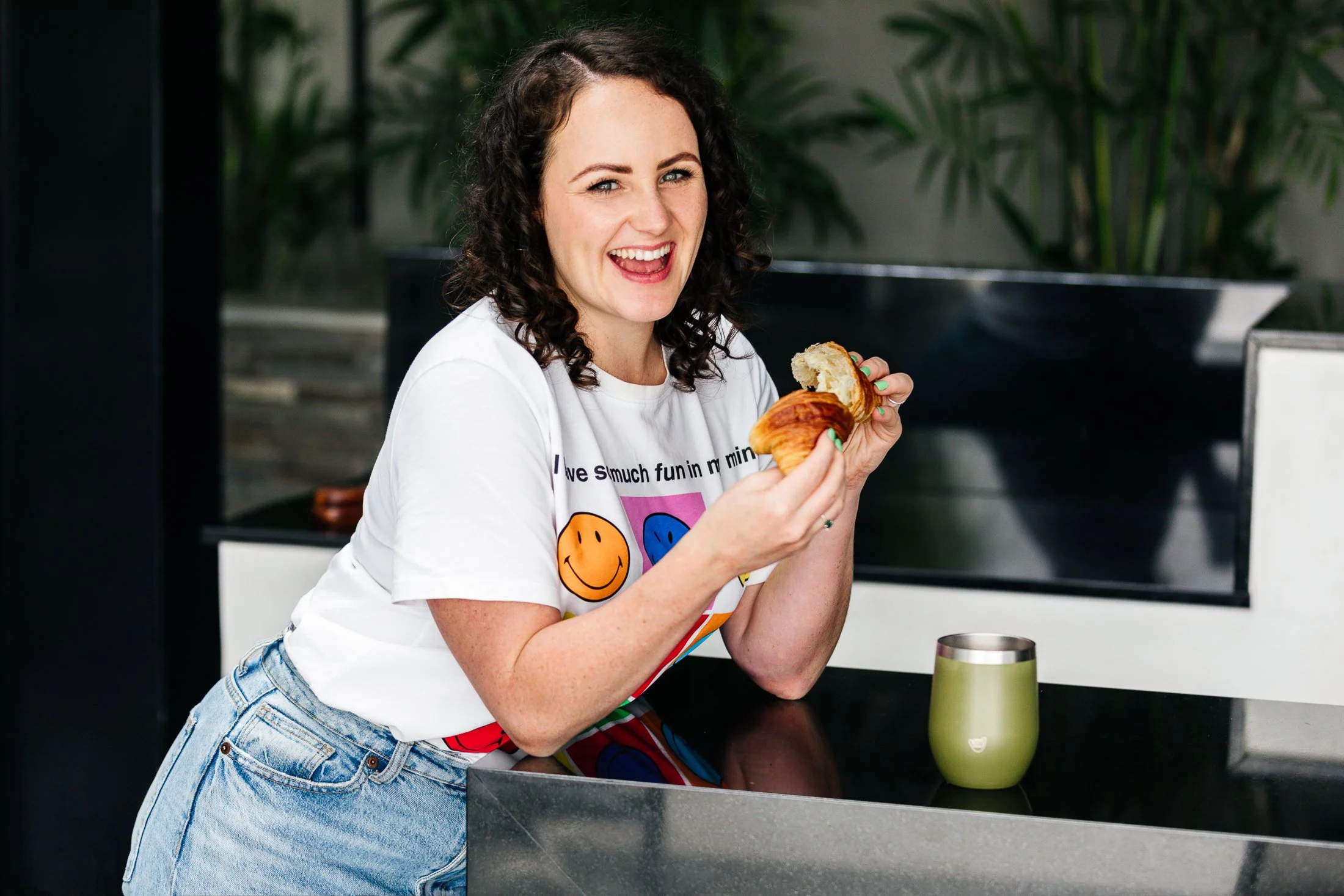
Hi, I'm Toni, The Binge Dietitian.
I help women who are stuck in the cycle of dieting, binge eating, and starting over every Monday build a calmer, more balanced relationship with food.
Together, we'll work on reducing binge eating, letting go of food rules, and helping you feel more confident around all foods without relying on willpower, restriction, or another diet.
If you're tired of thinking about food all day and ready for a different approach, I'd love to support you.