Why Can't I Stop Binge Eating?
If you've ever found yourself standing in the kitchen thinking, "Why can't I just stop?", you're not alone.
Many of the people I work with feel frustrated, ashamed, and confused by their eating. They tell themselves they'll be "good" tomorrow, only to find themselves caught in another binge a few hours or days later.
It's easy to assume the problem is a lack of willpower but binge eating is rarely about a lack of discipline.
More often, it's your body and brain responding to restriction, unmet needs, or an exhausting cycle of trying to control food.
Restriction Is Often Driving the Cycle
One of the most common reasons people binge eat is because they're not eating enough.
This might be physical restriction, such as:
Skipping breakfast
Delaying meals
Eating very little during the day - intentionally or unintentionally.
Following strict food rules
When your body doesn't get enough food, it works hard to protect you. Hunger increases, cravings become stronger, and food can start to take up more mental space.
Eventually, your body may push back by driving you to eat larger amounts of food than you intended.
Mental Restriction Matters Too
You don't have to be following a diet for restriction to affect your eating.
Many people are restricting mentally.
You might tell yourself:
"I shouldn't eat that."
"I've already had too much today."
"I'll start again on tomorrow or Monday."
When foods feel forbidden, they often become more tempting. This can lead to the familiar pattern of trying to be "good", feeling deprived, and then eating past the point of comfort when the rules become too difficult to maintain.
Are You Actually Satisfied?
Feeling physically full isn't always the same as feeling satisfied.
If your meals are built around what you think you should eat rather than what leaves you feeling content, it's common to keep searching for something else afterwards.
Satisfaction comes from eating enough food, including a balance of carbohydrates, protein, and fats, while also allowing foods you genuinely enjoy.
When meals are more balanced and satisfying, food often becomes less consuming in the mind.
Emotions Can Play a Role
Food can also be used to cope with difficult emotions. Stress, anxiety, loneliness, boredom, and overwhelm can all increase the urge to eat.
This doesn't mean you're failing.
Eating for comfort is a normal human behaviour.
The challenge comes when food becomes the main way of coping, especially when it's combined with restriction and food rules.
The All-or-Nothing Trap
Many people who binge eat get stuck in all-or-nothing thinking.
It sounds like:
"I've blown it now."
"I may as well keep going."
"I'll start again tomorrow."
A single biscuit, takeaway, or missed workout can feel like proof that the day is ruined.
The result is often eating far more than you wanted to before promising yourself you'll be stricter tomorrow, which keeps the cycle going.
What Helps?
Breaking free from binge eating isn't about finding more willpower.
It's about understanding what's driving the behaviour.
For many people, that means:
Eating regularly throughout the day
Letting go of rigid food rules
Including satisfying foods in meals
Exploring emotional triggers with curiosity
Seeking support when needed
If you've been asking yourself, "Why can't I stop binge eating?", know that there is usually a reason beneath the behaviour.
When you stop focusing on control and start understanding what's really going on, it becomes much easier to break the cycle and build a more peaceful relationship with food.
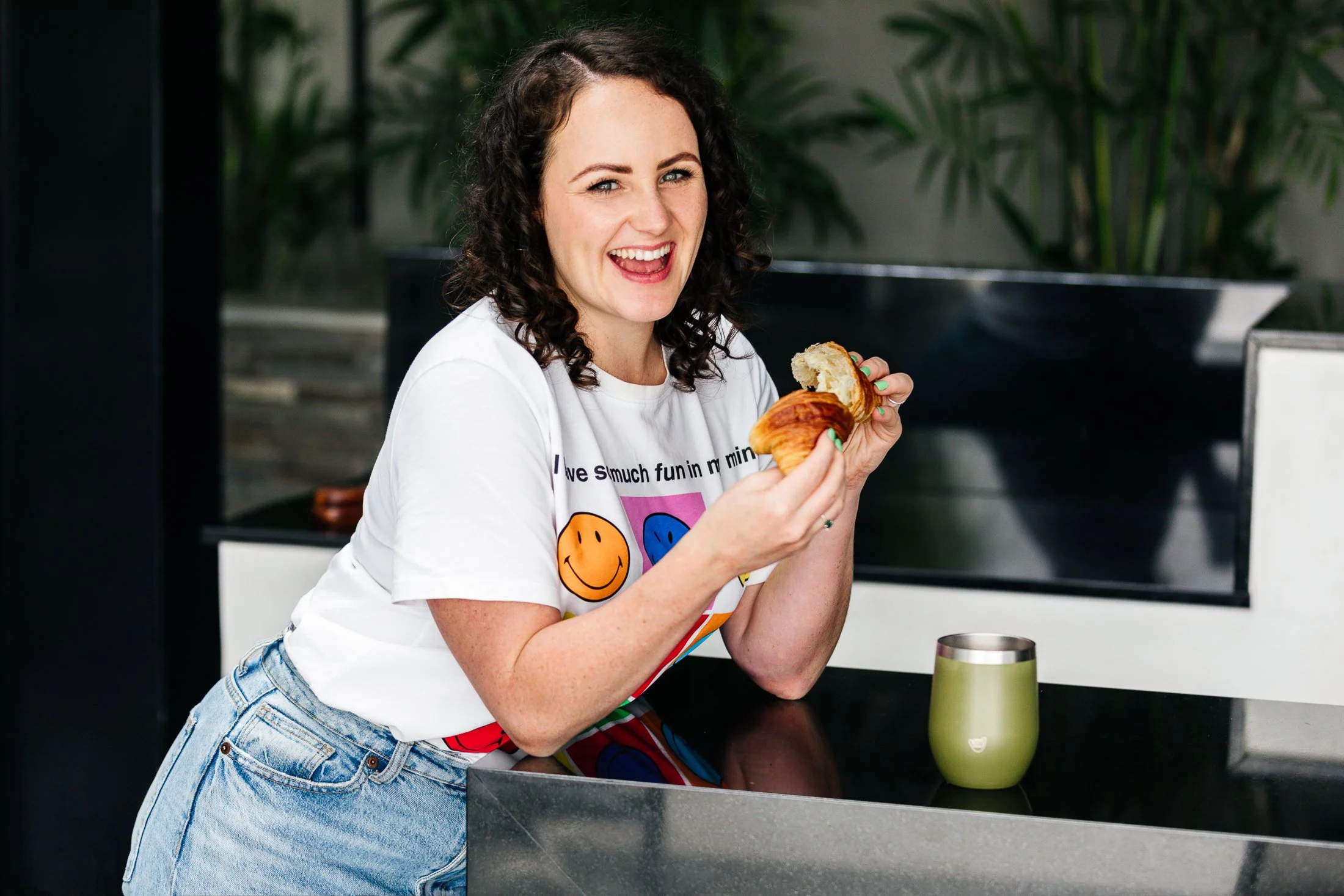
Hi, I’m Toni aka The Binge Dietitian
I help overwhelmed dieters stop binge eating by providing a personalised, compassionate, and non-diet approach.
I understand how confusing and frustrating it can be when you’re trying to improve your health. You’re feeling pulled in different directions about what to eat and what to avoid, often cutting out all your favourite foods in the process.