Have you ever felt like you can't trust yourself around Christmas food?
Perhaps you start thinking about all the food that's going to be available. The chocolates, biscuits, mince pies, party food and big family meals.
You might already be worrying about how much you'll eat, whether you'll binge or how you'll feel afterwards.
Maybe part of you is looking forward to enjoying all the food, but another part is worried that you'll lose control.
And if you've experienced binge eating, these feelings can become even more intense.
You might tell yourself that you need to be stricter in the run-up to Christmas, avoid certain foods or make sure you don't eat too much.
But there's a reason why Christmas food can feel particularly difficult when you've spent years dieting or restricting what you eat.
And it isn't because you lack willpower.
1. You've spent years telling yourself certain foods are off-limits
Think about the foods you tend to struggle with.
Are there certain foods that you try not to keep in the house? Foods you only allow yourself at weekends? Or foods you feel guilty about eating?
When you've spent a long time restricting certain foods, they can start to feel much more significant.
You might think about them frequently, feel excited when you finally get to eat them or struggle to stop eating once you start.
Christmas can make this even more noticeable because these foods are suddenly everywhere.
You might find yourself thinking:
"I need to enjoy this now because I'll be back on my diet in January."
When you believe you won't be allowed to eat something again, it can feel like your last opportunity.
This can create a sense of urgency around food.
Rather than trying to avoid these foods even more, it can help to start challenging the rules that make them feel so important.
You deserve to enjoy foods you like throughout the year, not just during a few weeks in December.
2. You're restricting before Christmas to prepare for eating more
Perhaps you've already started trying to eat less because you know Christmas is coming.
You might skip meals before a party, have a smaller lunch before a big dinner or try to be particularly strict during the week.
It can feel like a sensible way to balance things out.
But restriction can increase both physical hunger and mental preoccupation with food.
By the time you get to the party or Christmas meal, you might be much hungrier than usual.
You may also feel like you've been waiting all day to eat the foods you've been trying to avoid.
This can make it harder to recognise what you want and need from food.
It's one reason why eating regularly throughout the day can be so helpful.
You don't need to arrive at Christmas dinner feeling as hungry as possible to enjoy it.
3. You're worried that giving yourself permission means you'll binge
This is something I hear a lot from people who have been dieting for years.
They worry that if they stop restricting, they'll eat everything in sight.
They might think:
"If I let myself eat chocolate whenever I want, I'll never stop."
Or:
"If I don't have some control over my eating, I'll just binge all the time."
I understand why this feels scary, especially if you've experienced episodes where you felt unable to stop eating.
But there's a difference between giving yourself permission to eat and feeling out of control around food.
Giving yourself permission means you don't have to follow rigid rules or punish yourself for eating something you enjoy.
It doesn't mean you have to eat everything available, or that you can't have preferences around food.
It also doesn't mean that the urge to binge will disappear overnight.
If you've spent years in a cycle of restriction and binge eating, it can take time to build trust around food.
Regular eating, adequate nourishment and gradually challenging food rules can all be part of that process.
4. Christmas can bring extra pressure and changes to your routine
It's not just the food that can make this time of year difficult.
Your usual routine might change. You might have more social events, less time for yourself, disrupted sleep or extra responsibilities.
You could also be dealing with family dynamics, difficult conversations or comments about your body and eating.
If you're already feeling overwhelmed, food might become another thing you're trying to manage.
For some people, binge eating is connected to emotions such as stress, loneliness, boredom or anxiety.
So, if you're finding food more difficult during the festive season, it's worth looking beyond what you're eating.
Ask yourself:
Am I getting enough rest?
Am I feeling overwhelmed by everything I have to do?
Have I been eating regularly?
Am I putting pressure on myself to make Christmas perfect?
Am I using food rules to try to feel more in control?
Understanding what's happening can help you work out what support you need, rather than blaming yourself for your eating.
5. You don't have to make Christmas a test of your recovery
If you're working on your relationship with food, you might feel pressure to get Christmas right.
You might want to prove that you can eat chocolate without bingeing, enjoy Christmas dinner without guilt or get through the festive season without feeling out of control.
But recovery isn't about passing a test.
You might eat more than you intended. You might experience food guilt. You might find certain situations difficult.
That doesn't mean you've gone backwards or that all your progress has disappeared.
Instead of focusing on whether you've eaten perfectly, think about how you can support yourself.
Can you continue eating regularly, even after a difficult meal?
Can you avoid compensating for what you've eaten?
Can you give yourself permission to enjoy food without judging yourself?
Can you reach out for support when things feel difficult?
These small changes can help you move away from the restrict–binge–restart cycle.
You can enjoy Christmas without needing to control everything you eat
If Christmas food already feels overwhelming, I want you to consider whether the rules you're putting in place are actually helping.
Are they making you feel more relaxed around food? Or are they making you think about food even more?
You don't have to spend December proving that you can control your eating.
You don't need to avoid certain foods, save up calories or promise yourself you'll start again in January.
You deserve to enjoy Christmas without feeling guilty about every meal, snack or treat.
And if binge eating is something you're struggling with, you don't have to figure it out alone.
My free mini-class, Why You Can't Stop Binge Eating (And It's Not What You Think), explains why binge eating happens and what you can focus on to start changing the cycle.
Ready To Break Free From Binge Eating?
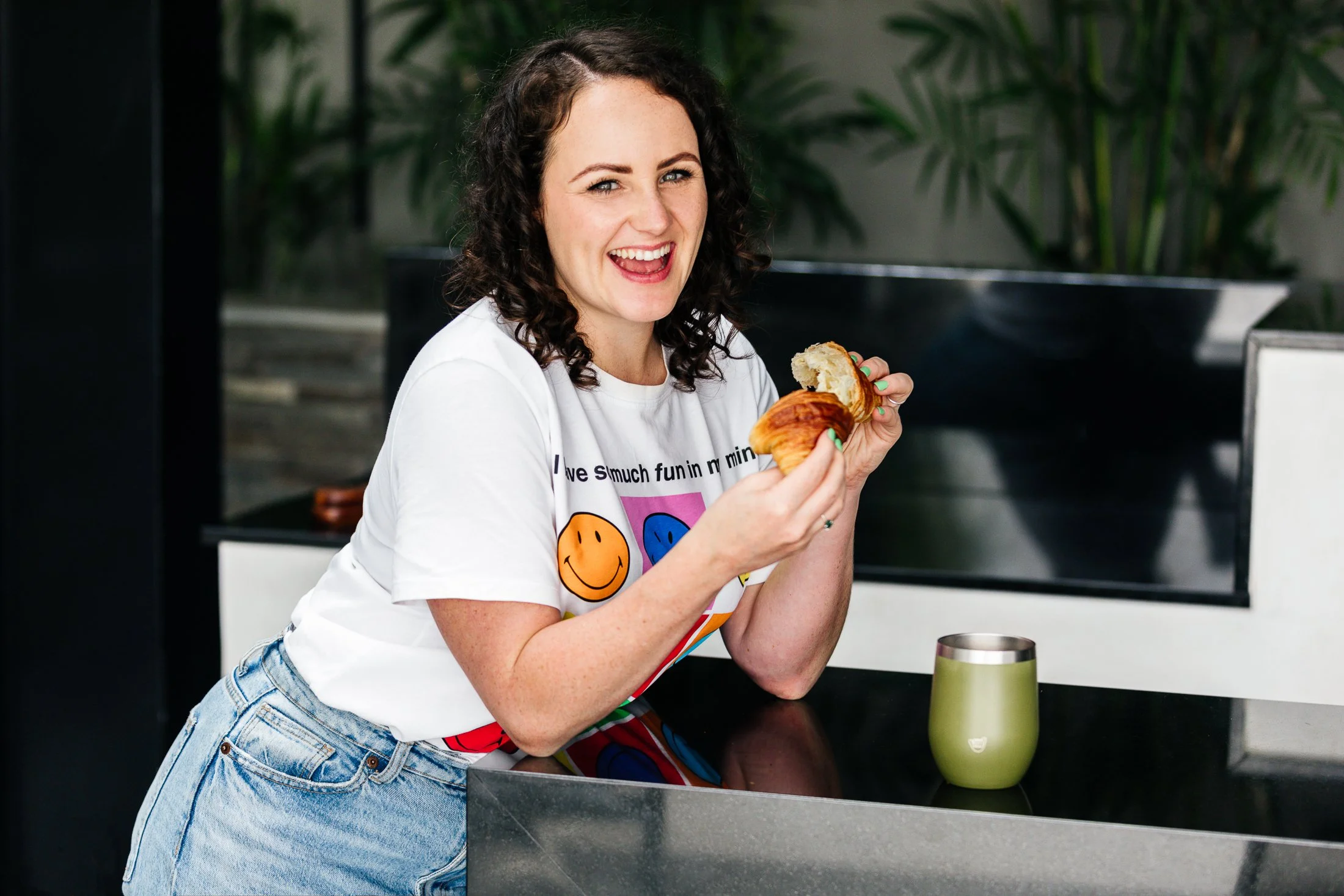
Hi, I'm Toni, The Binge Dietitian.
I help women who are stuck in the cycle of dieting, binge eating, and starting over every Monday build a calmer, more balanced relationship with food.
Together, we'll work on reducing binge eating, letting go of food rules, and helping you feel more confident around all foods without relying on willpower, restriction, or another diet.
If you're tired of thinking about food all day and ready for a different approach, I'd love to support you.