PCOS (PMOS) and Binge Eating: What’s the Connection?
If you have PCOS (PMOS) and struggle with binge eating, you might have wondered whether the two are connected.
Perhaps you’ve been told to lose weight to manage your symptoms, tried changing the way you eat, or found yourself stuck in a cycle of restricting food and then feeling out of control around it.
You might even blame yourself for not having enough willpower.
But binge eating isn’t a lack of discipline, and the relationship between PCOS (PMOS), food and eating behaviours is more complex than you might have been led to believe.
As a registered dietitian specialising in binge eating, I want to explore what the research tells us, why these experiences can overlap, and what might help you move towards a more peaceful relationship with food.
First, what is PCOS (PMOS)?
You may have noticed that the name PCOS is starting to change.
In May 2026, Polycystic Ovary Syndrome (PCOS) was renamed Polyendocrine Metabolic Ovarian Syndrome (PMOS) to better reflect the condition’s wider hormonal, metabolic and reproductive effects. You’ll still see PCOS used in older research and online resources, so thats’s why I’m using both terms in this blog. Read more about the name change.
PMOS is a complex endocrine condition that can affect hormone levels, menstrual cycles, skin, fertility and metabolic health. Symptoms and experiences vary from person to person.
It’s also a condition that can affect how you feel about your body and how you approach food.
And that brings us to binge eating.
Is there a link between PCOS (PMOS) and binge eating?
In short, yes. Research suggests that people with PCOS are more likely to experience binge eating and other eating difficulties with PCOS.
A 2024 systematic review and meta-analysis looked at 20 studies involving almost 29,000 people with PCOS and more than 258,000 people without the condition.
The researchers found that people with PCOS had higher odds of experiencing an eating disorder overall. They also found increased odds of binge eating disorder, bulimia nervosa and disordered eating behaviours. Differences in disordered eating were seen across both lower and higher weight groups.
However, this research shows an association, not proof that PCOS directly causes binge eating. The relationship is likely to involve several factors, and more research is needed to understand exactly how they interact.
The important thing to take away is that binge eating deserves attention in people with PCOS (PMOS), whatever their body size. It shouldn’t be dismissed or overlooked simply because the conversation is focused on weight or physical symptoms.
Why might PCOS (PMOS) and binge eating overlap?
There isn’t one single explanation. A few factors may contribute, and they can affect each person differently.
1. The pressure to lose weight
Many people with PCOS are given weight-focused advice, sometimes from the very beginning of their diagnosis.
You might have been told that losing weight will improve your symptoms, or that you need to change your diet to get your hormones under control.
Although weight management may be part of some people’s healthcare, it can become difficult when weight loss is presented as the main measure of success or the answer to every symptom.
You might start monitoring your food more closely, cutting out carbohydrates, avoiding certain foods or trying to eat as little as possible.
The problem is that restriction can contribute to binge eating.
When you spend your day trying to control your food intake, you may become physically hungry, mentally preoccupied with food or more likely to feel deprived. Eventually, you might find yourself eating more than you intended and feeling as though you’ve lost control.
That can lead to guilt and a renewed determination to be stricter tomorrow, keeping the cycle going.
If this sounds familiar, it doesn’t mean you’ve failed. It may mean the approach you’re trying is making eating harder, not easier.
2. Body image and food guilt
PCOS (PMOS) can come with symptoms that affect how you feel about your body, including changes in skin, hair growth, weight or menstrual cycles.
Living with symptoms that feel difficult to control can be frustrating, especially when you’re surrounded by messages telling you that your body should look a certain way.
You might find yourself comparing your body with other people’s, feeling uncomfortable in clothes or believing you need to change your appearance before you can feel confident.
When you’re unhappy with your body, dieting can seem like a way to regain control.
But if dieting leads to restriction and binge eating, it can leave you feeling even more disconnected from your body and more critical of yourself.
You deserve support with your body image and eating behaviours now, rather than having to wait until your body changes.
3. Hormones, appetite and metabolic health
PCOS (PMOS) involves hormonal and metabolic changes, and it’s understandable to wonder whether these might affect your appetite, cravings or eating patterns.
Metabolic factors, including insulin resistance, are relevant to PCOS. However, the relationship between these factors and binge eating is complex, and current evidence doesn’t establish one simple hormonal explanation for binge eating in people with PCOS.
It’s important not to assume that every craving or episode of binge eating is caused by hormones.
Physical hunger, previous restriction, stress, emotions, sleep, your environment and learned food rules can all play a part. Often, several things are happening at once.
Rather than trying to find one thing to blame, it can be more helpful to look at your own experiences and identify what might be contributing to the cycle.
4. Stress and emotional wellbeing
Managing a long-term health condition can be exhausting.
Appointments, symptoms, concerns about fertility, uncertainty about the future and the pressure to follow dietary advice can all take up mental space.
Food might become a source of comfort when you’re overwhelmed, or eating might feel like one of the few things you can enjoy without having to think about your health.
There’s nothing inherently wrong with finding comfort in food. Eating is about more than nutrition, and food can be part of how we experience pleasure, connection and comfort.
However, if binge eating feels distressing or out of control, you deserve support to understand what’s happening without adding shame to an already difficult situation.
You may see it as a failure and respond by becoming more restrictive with food.
For anyone with a history of dieting, this can quickly pull them back into old patterns of food rules, guilt and binge eating.
How can you manage PCOS (PMOS) without making binge eating worse?
If you’re experiencing both PCOS (PMOS) and binge eating, you don’t have to choose between looking after your health and improving your relationship with food.
Here are some places to start.
1. Work towards regular, adequate eating
If you regularly skip meals, delay eating or try to compensate for what you ate earlier, your body may be going for long periods without enough food.
This can increase hunger and make food feel more difficult to manage later in the day.
Try building a more consistent eating pattern that includes regular meals and snacks when you need them. Aim for meals that are satisfying and provide a mix of carbohydrates, protein, fats and other foods you enjoy.
You don’t need to eat perfectly. The aim is to give yourself enough food consistently, rather than trying to get through the day on as little as possible.
2. Be cautious with restrictive food rules
You may have heard that you need to cut out sugar, avoid carbohydrates or follow a very specific diet to manage PCOS.
But there isn’t one dietary pattern that has been shown to be best for everyone with PCOS across hormonal, metabolic and psychological outcomes. International guidance recommends sustainable eating that reflects individual preferences and needs, while avoiding unnecessarily restrictive or nutritionally unbalanced diets.
If you’re struggling with binge eating, strict food rules may make recovery harder.
Instead of asking, “What do I need to cut out?”, try asking:
Am I eating enough throughout the day?
Are there foods I avoid because I’m scared of losing control around them?
Do my food rules leave me feeling deprived?
What would make eating feel more manageable and satisfying?
You can still care about your health without labelling foods as good or bad.
3. Look beyond weight as the only measure of health
Your health is not defined by a number on the scales.
There are many ways to support your wellbeing with PCOS (PMOS), including eating regularly, enjoying movement that feels good, getting appropriate medical care and looking after your emotional wellbeing.
Your healthcare team can help you monitor relevant symptoms and metabolic health markers without making weight loss the sole focus of every conversation.
If weight-focused advice leaves you feeling anxious around food or triggers restrictive eating, it’s worth telling your healthcare professional. Your treatment should take your whole experience into account.
4. Get support for binge eating
You don’t need to wait until binge eating becomes more severe before asking for help.
A registered dietitian with experience in binge eating can help you explore your eating patterns, build regular eating habits and work towards a more flexible relationship with food.
Psychological support may also be helpful, particularly if binge eating is linked with distress, body image concerns or difficult emotions. Your GP or other healthcare professional can help you access appropriate assessment and treatment.
International PCOS guidance specifically recommends considering disordered eating and eating disorders regardless of weight, particularly when discussing weight management and lifestyle interventions.
You deserve care that recognises both your physical health and your relationship with food.
You can care for your health without fighting your body
If you have PCOS (PMOS) and struggle with binge eating, I want you to know that you’re not broken, and you haven’t failed because another diet hasn’t worked.
There may be a complicated mix of physical, psychological and environmental factors influencing your experiences. You don’t have to figure all of them out on your own.
You can work towards supporting your health without constantly restricting what you eat, feeling guilty about food or trying to earn your next meal.
And you don’t need to wait until you’ve lost weight to start building a more peaceful relationship with food.
References
Cooney, L. G. et al. (2024). Increased Prevalence of Binge Eating Disorder and Bulimia Nervosa in Women With Polycystic Ovary Syndrome: A Systematic Review and Meta-Analysis. The Journal of Clinical Endocrinology & Metabolism, 109(12), 3293–3305. https://doi.org/10.1210/clinem/dgae462
Teede, H. J. et al. (2023). Recommendations From the 2023 International Evidence-based Guideline for the Assessment and Management of Polycystic Ovary Syndrome. The Journal of Clinical Endocrinology & Metabolism, 108(10), 2447–2469. https://pmc.ncbi.nlm.nih.gov/articles/PMC10477934/
Endocrine Society (2026). Polyendocrine Metabolic Ovarian Syndrome: New name to improve diagnosis and care. https://www.endocrine.org/news-and-advocacy/news-room/2026/pcos-name-change
Ready To Break Free From Binge Eating?
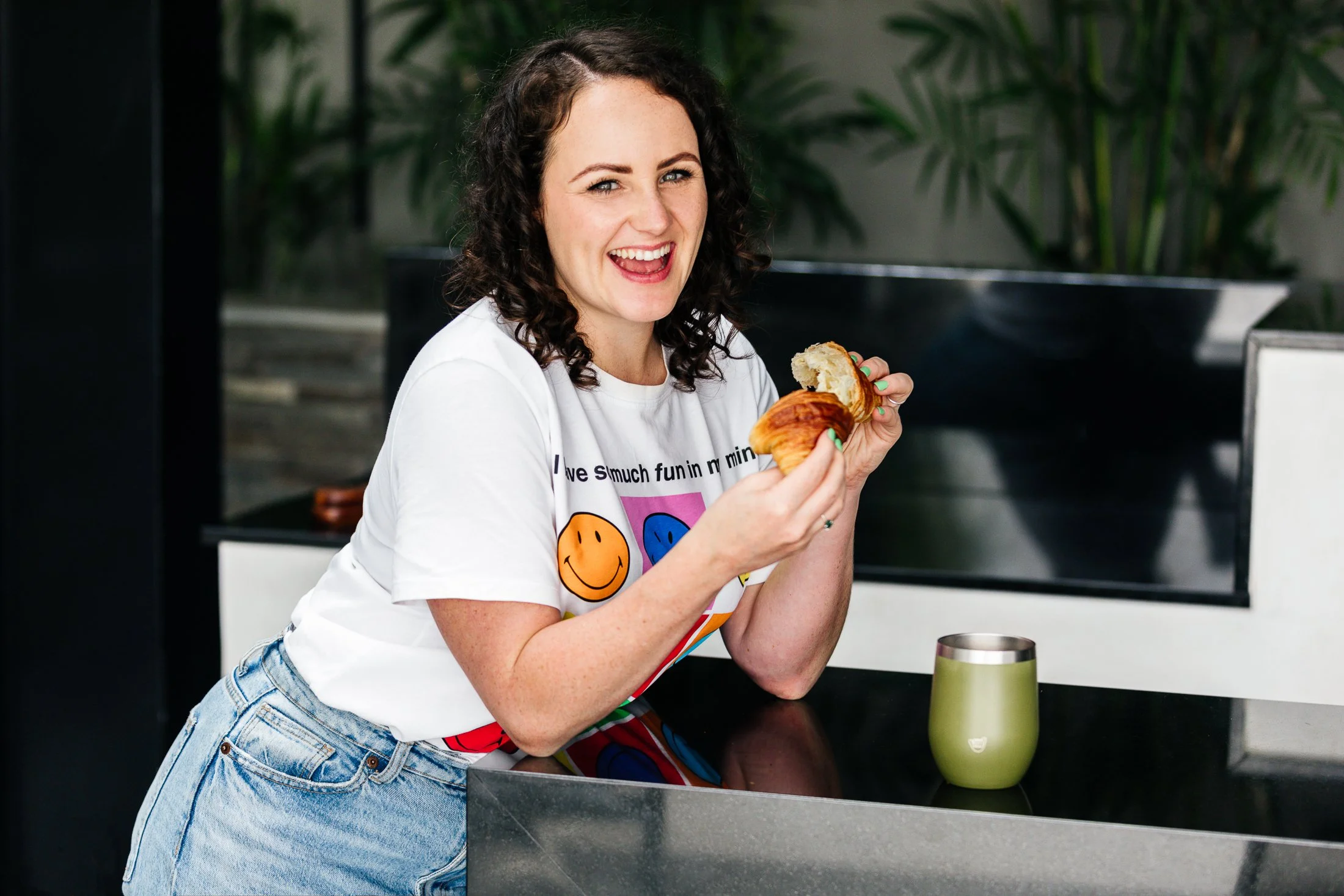
Hi, I'm Toni, The Binge Dietitian.
I help women who are stuck in the cycle of dieting, binge eating, and starting over every Monday build a calmer, more balanced relationship with food.
Together, we'll work on reducing binge eating, letting go of food rules, and helping you feel more confident around all foods without relying on willpower, restriction, or another diet.
If you're tired of thinking about food all day and ready for a different approach, I'd love to support you.